Mark's biography confronts us with the radical revolution of the LORD Jesus.
Just as the disciples in this gospel constantly struggle to face the challenge of following Jesus in the way of the Cross, so we too are forced to examine our lives at the deepest level.
Mark shows us that Jesus is the Divine Son of Man who is the Suffering Servant.
Jesus is the LORD over All and He is also the Servant of All.
We all might like a God who reigns with authority from the comfort of heaven, but can we handle the Living God who reigns in glory from the darkness and pain of the Cross? With his urgent style of writing and his brilliant presentation of the identity and mission of Jesus, Mark calls us to turn around and allow our world to be turned upside down by the LORD Jesus.
The book of Acts is the second volume of Luke's research. The first volume is an account of what Jesus began to do and this second volume is what Jesus continued to do after his ascension. Luke chose a narrow perspective, ignoring the spread of the gospel across North Africa or into the nations east of Jerusalem. What of the apostle Thomas in India or Thaddeus in Odessa? Whether Luke knew about these continuing works of Jesus or not, we cannot say, but what we do know is that Luke was a travelling companion with the apostle Paul. Luke wrote about the spread of the gospel to the nations that he was involved in.
The apostles have a unique foundational place in that work, but the church today is also part of that ongoing work of Jesus. The apostle Paul became involved in an intense dispute about the place of foreigners in the people of God. We know that Paul found himself in a life or death struggle over the freedom of the nations of the world to be full members of the people of God through trusting Jesus. The Holy Spirit selected the lives of Peter and Paul to be recorded in the Bible in order to present the vital issues of global Christianity to the church in every age.

The Book of Romans is a mission manifesto - stirring up the church at Rome to see that the Way of Jesus in Church is the answer for everybody, everywhere. That is the simple message of the whole book. The ancient promises made to Abraham, Isaac and Jacob, that all the nations of the world would receive gospel blessings through their seed/Seed is at the very heart of the book of Romans. These gospel promises for the whole world are what drives every part, including the deep questions of chapters 9-11 and the list of international Church workers in chapter 16.
The book of Romans is a pocket mission manifesto - showing how Jesus answers every need and how everybody can be right with God through faith in Jesus. Church is the answer for everybody, everywhere.
Paul was training the ancient Roman Church to share the message of Jesus with people all over the world - across every culture, every divide.
For Paul, preaching the gospel and establishing local churches is the only way to get serious about the problems of this passing world and the only way to be rescued from the eternal trouble in the age to come. The Living God chose Church/Israel in ancient times to reach the whole world, and He is launching this to the whole world in a new way: Paul wants to explain how this works.
When we read his letters we need to listen to him as a zealous, church planting evangelist with a vision to reach all nations with the gospel.
The basic questions that Paul addresses in this letter are exactly the kind of questions that we might face as we take gospel blessings to all the nations of the world :
What's wrong with the world?
Do "religious" people need Jesus?
Surely some people are good enough?
Can't we fix ourselves?
What's death all about?
If we can always be forgiven, does sinful behaviour really matter?
Why do I keep on sinning even after I am a Christian?
Does God actually punish wrong doing?
How am I supposed to live the Christian life?
What about all the suffering in the world and in my life?
What role does the Holy Spirit play in the life of a believer?
What does the future look like?
Has God’s promise to bless the whole world failed?
Where does Israel fit into all this?
Is it fair for God to use some more than others?
What about people who have never heard of Jesus?
If even people who oppose God serve Him, then why does He complain about them?
How should Christians relate to rulers, authorities and governments?
How are we supposed to cope with so many cultural differences in Church?
How can we handle disagreements in the Church family?
How do we all fit together as one Church family?
Why does evangelism matter so much?
Does God still care about the nations of the world?
What if the Book of Romans is a very down to earth and practical book for global Church mission...?
What if it is about the constant challenges that every generation will face when they are planting new churches in new places?
If we ask the question, ‘Why hasn’t the gospel reached all people and the world been rescued?’ the answer is not, ‘because the world is really bad’. The answer is that the church has become complacent and disinterested in sharing the great news of Jesus.
The greatest danger to evangelism is not the evils of the world, but the apathy of Church.
Paul writes this letter to fire up believers in this great and necessary task of telling all people everywhere about Jesus.
The Corinthian church faced a terrible crisis with influential 'leaders' claiming to be powerful apostles.
These 'super apostles' boasted about all kinds of spiritual experiences, speaking skill and financial power.
In 2 Corinthians Paul is forced to open up his life as never before in order to show the confused Corinthian saints what it really means to serve the church.
If we want to lead a church, a small group or our family, then, rather than turn to the countless modern books on 'leadership', let's study this letter from the Holy Spirit of Jesus Christ to His saints in every age.
The Galatians had enjoyed the incredible freedom that Jesus gives us.
However, 'religious' people had joined the Galatian fellowship, claiming to have deeper knowledge from the ancient Scriptures, claiming to have a bigger picture than the simple good news that they had heard. These new teachings were robbing the Galatians of their freedom and their confidence.
They were falling into a kind of religious slavery, making them think more and more about their own religious efforts and leaving little room for Jesus. Paul was desperate to rescue the Galatians from this dreadful cult.
Galatians shows us that the answer is to be found in Jesus, the Messiah promised and hoped for since the beginning of the world. There is freedom in Him.
All fleshly categories that constrain people are blown apart by His life, death and resurrection. When we come to Jesus we find the answer to all things. He is the hope and desire of the ages and the nations.
The book of Ephesians is the most thorough and wide-ranging account of what it means to be the Church, in the New Testament.
The Ephesian Christians lived in the shadow of the massive temple to Artemis, as we read in Acts 19. That 'wonder of the ancient world' must have dominated not only the skyline but also the thinking of the city.
Ephesus was a city full of spiritual darkness and occult power.
The Church was the oasis of sanity in that pagan chaos and confusion, the place where the truth of Jesus was lived and taught. The church caused a profound social revolution. Paul's letter to the Ephesians will take us down into the heart of our lives together in the local church.
Do we provoke crises or revolutions in our own towns and cities because of the way we live together? Why is it so important to be part of a local church?
How is the local church the answer to the social problems of the world?
Why is it the proper context for our marriages, families and careers?
Why is the church the very centre of the universe?
Be Joyful! “Joy is the music that runs through this epistle, the sunshine that spreads over all of it. The whole epistle radiates joy and happiness.”
The letter of Philippians was written by Paul while he was in prison in Rome in about 63AD, but there is no bitterness or disillusionment here. In this letter Paul opens his heart to us, showing us the secret to real joy in every circumstance. The letter speaks of fellowship in the sufferings of Jesus, and yet there is no book of the Bible so full of joy.
In this book the apostle Paul will share with us the secret of contentment. He will show us how to know true contentment at all times, no matter what hardships we have to face. He will show us that real joy does not depend on circumstances, but should be the constant possession of every citizen of heaven.
Within probably 50 years of Paul’s letter, a great Christian leader called Polycarp wrote a letter to the Philippians where he speaks very highly of Paul’s letter:
These things, brethren, I write to you concerning righteousness, not because I take anything upon myself, but because you have invited me to do so. For neither I, nor any other such one, can come up to the wisdom of the blessed and glorified Paul. He, when among you, accurately and steadfastly taught the word of truth in the presence of those who were then alive. And when absent from you, he wrote you a letter, which, if you carefully study, you will find to be the means of building you up in that faith which has been given you, and which, being followed by hope, and preceded by love towards God, and Christ, and our neighbour, "is the mother of us all."
Polycarp knew that he could never write with the divinely inspired wisdom of the great apostle Paul, so he was happy to point the Philippians to Paul’s letter so that they could grow to spiritual maturity.
Why did Paul write the letter? Paul planted the church in Philippi, as we read in Acts 16, but his arrival in Philippi is packed with divine providence. At the beginning of Acts 16 Paul brouhgt Timothy along with him. In verse 6 the Holy Spirit prevented Paul from going into the province of Asia. Then, Acts 16:7-8 “When they came to the border of Mysia, they tried to enter Bithynia, but the Spirit of Jesus would not allow them to. So they passed by Mysia and went down to Troas.”
It seemed that every direction they took was blocked by the Holy Spirit. However, a momentous event happened to the apostle Paul; an event that would change the direction of European history.
Acts 16:9-12 Paul had a vision of a man of Macedonia standing and begging him, "Come over to Macedonia and help us." After Paul had seen the vision, we got ready at once to leave for Macedonia, concluding that God had called us to preach the gospel to them. From Troas we put out to sea and sailed straight for Samothrace, and the next day on to Neapolis. From there we travelled to Philippi, a Roman colony and the leading city of that district of Macedonia.
The Holy Spirit was determined to get Paul into Europe, and his first European mission was in Philippi.
After Lydia believed the gospel, Paul’s mission team had a place to stay. The spiritual world knew the significance of the arrival of the apostolic mission team, and one spirit through a young girl declared, “These men are servants of the Most High God, who are telling you the way to be saved” (verse 17). When Paul drove that spirit out of the girl, in the Name of Jesus, he was involved in a clash with the civic authorities.
Luke is very careful to explain the issues of civic authority and law in Philippi because they were critical to life in that city. The crowd (verses 20-21) “brought them before the magistrates and said, ‘These men are Jews, and are throwing our city into an uproar by advocating customs unlawful for us Romans to accept or practise.’” Notice how the crowd are so anxious to be the very best Roman citizens. We sense the pride these people felt about having the privileges of Roman law and citizenship. With this in mind, we can understand more of what is going on at the conclusion of Acts 16.
Acts 16:37-40 “Paul said to the officers: "They beat us publicly without a trial, even though we are Roman citizens, and threw us into prison. And now do they want to get rid of us quietly? No! Let them come themselves and escort us out." The officers reported this to the magistrates, and when they heard that Paul and Silas were Roman citizens, they were alarmed. They came to appease them and escorted them from the prison, requesting them to leave the city. After Paul and Silas came out of the prison, they went to Lydia's house, where they met with the brothers and encouraged them. Then they left.”
The Philippians took Roman citizenship very seriously and were deeply shaken when they saw how they had illegally treated Roman citizens. What would Rome think of this kind of behaviour?
Paul knew that the Church must not be classified as a politically dangerous organisation. It was vital that the Roman Empire realise that the followers of Jesus were the very best citizens. That is why Paul made sure that the magistrates give a public vindication of Paul and Silas.
So, the Philippians highly valued Roman citizenship and we will see that theme in Paul’s letter.
A key theme of the book is the unity of the church in the gospel. How important this message is today! On the one hand, there are those who speak a great deal about church unity, but don’t explain what it is that truly unites us in truth and purpose. Truth always runs a very poor second to unity in such thinking. What are we united about if we are not clear on the gospel itself? On the other hand, there are those who love truth much more than unity. For them, specific systems of doctrine will always win over Christian fellowship. They will all too easily divide from gospel-loving fellow Christians. Paul teaches us how to grasp truth and unity in a proper balance.
The letter of Philippians teaches us important lessons. In many ways 1:27-28a is a summary of the whole letter. We have seen that ‘being a citizen’ was at the heart of life in Philippi, so Paul speaks of being a citizen in 1:27. However, this is not clear in many English translations, so we have corrected the NIV translation below.
1:27-28a “Whatever happens, live as a citizen worthy of the gospel of Christ. Then, whether I come and see you or only hear about you in my absence, I will know that you stand firm in one spirit, contending as one man for the faith of the gospel without being frightened in any way by those who oppose you.”
Notice the balance of truth and unity. The faith of the gospel is the banner under which the church gathers, yet we gather together, united against our real opponents. That is how we are true citizens of Christ’s kingdom, which is so much more than all the kingdoms of this passing age.
We know true contentment as we give ourselves away for others in the service of Jesus. You can never grasp fulfilment if we are pursuing it for yourself. It is only when we forget ourselves and live for Jesus that we discover true contentment and joy.
We live in an age, in a world, where there are just endless opinions… endless ideas… endless arguments. How can we ever find out the truth? What holds it all together?
The Colossian church lived in a pagan city that had all kinds of shrines, cults, “colleges” and temples. The ‘gods’ and angels were all mixed together with political power and money… forming a complicated vision of the universe.
Do we have to make the best of our lives – our science, our art, our technology, our law, our music, our politics, our diets and our philosophy – and then try to fit Jesus into the picture… or perhaps simply put Him into a box marked “spiritual” and leave Him out of everyday life entirely?
NO! Jesus is not part of something else. Jesus is the big picture. He is the Framework that makes sense of everything else. The only system that fits Jesus is a system that begins and ends with Jesus. When we begin and end with Jesus then we find that everything else fits in – everything else makes sense – everything we do finds a proper place.
The book of Colossians shows us how and why Jesus is the beginning and the end – the biggest and best, both in God and the universe!

The return of Jesus from heaven is the heart-beat of the letters to the Thessalonians, written by Paul, Silas and Timothy to this young church.
If the Thessalonians fixed their hopes clearly and faithfully on their wonderful resurrection future with Jesus then they would be able to endure the lies, violence, rejection and pressure of living for Jesus in Thessalonica.
These letters are full of encouragement, pastoral concern and loving Christian teaching to help strengthen the believers to keep their focus on the return of Christ as King and to spur them on to remain faithful to the gospel message.
2 Timothy is probably the very last letter that the great apostle Paul ever wrote.
Having walked the Way of Jesus for so long, what final wisdom would he have for a young man who still had far to walk?
In our day we see the desperate need for Bible teachers in every local church.
We have seen the terrible devastation brought on the Church by false teachers, self-serving personalities, status-seeking careerists and those who do little more than declare their own religious opinions or home-spun wisdom from the pulpit.
In this final letter from Paul we see how his greatest concern for the health and growth of the future Church was self-sacrificial Bible teachers who were determined to speak and live only as God has spoken.
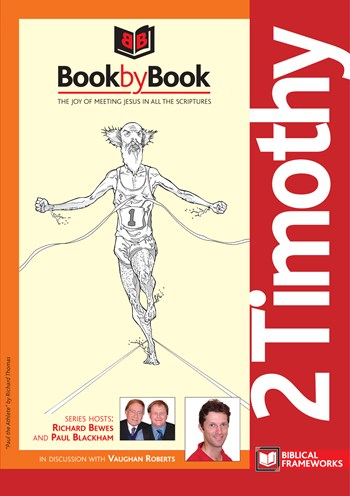
2 Timothy is possibly the very last letter that the great apostle Paul ever wrote. We come to the end of the thrilling life of a man who had served Jesus with all his heart, mind, soul and strength. What would be his final instruction to the church? As he got ready to die, what did he want to say in order to build up the expanding multinational Church of Jesus the Messiah? Having walked the Way of Jesus for so long, what final wisdom would he have for a young man who still had far to walk?
(This letter) may be regarded as the dying counsels of the most eminent of the apostles to one who has just entered on the ministerial life… We feel that, having little time to express his wishes, he will select topics that lie nearest his heart, and that he deems most important. There is no more interesting position in which we can be placed, than when we sit down at such a man’s feet, and listen to his parting counsels. To a young minister of the gospel, therefore, this epistle is invaluable; to any and every Christian, it cannot fail to be a matter of interest to listen to the last words of the great apostle of the Gentiles…
Albert Barnes’ introduction to his commentary on 2 Timothy. 2 See Barnes for a fuller analysis.
In our day we see the desperate need for Bible teachers in every local church. We have seen the terrible devastation brought on the Church by false teachers, self-serving personalities, status-seeking careerists and men who do little more than declare their own religious opinions or home-spun wisdom from the pulpit. In this final letter from Paul we see how his greatest concern for the health and growth of the future Church was self-sacrificial Bible teachers who were determined to speak and live only as God has spoken.
In the first letter to Timothy Paul instructed Timothy in all the basics of being a faithful minister in a local church. In this second letter he sets two alternatives before Timothy. He could be a barren, compromised, unfaithful minister who would be ashamed at the appearing of Jesus… Or he could be a fruitful and faithful minister who would be received with great joy by Jesus on that final day.
It is a vital challenge. Having been united to Jesus in His death and resurrection, what kind of life and ministry will we have? How can we fulfil our duty in the way that Paul himself did? If we are saved from hell but live a life of fruitless compromise, how will we face Jesus when He appears? Just what did He save us for?
Can we trust Him to save us from future Hell if we don’t trust Him now to save us from the selfish, greedy life that comes from Hell?
It is clear that this letter was written when Paul was a prisoner – see 1:8, 16. Was this during the time of his imprisonment at Caesarea? Was it during his imprisonment at Rome? Was he released from prison in Rome and then subsequently re-arrested? It is our view that this letter was written by Paul during a second imprisonment in Rome and we provide the following reasons for this view.
1. In Paul’s letters to the Philippians and Philemon he was confident of being released – Philippians. 2:24; Philemon verse 22. Here he expected to be executed – 2 Timothy 4:6.
2. In chapter 4:16 he refers to an earlier trial. “The most natural interpretation is to suppose that he had one hearing, and had been discharged, and that the imprisonment of which he speaks in this epistle was a second one.” This is also implied in 4:17 – “I was delivered from the lion’s mouth.”
3. In 4:20 he seems to speak of a recent journey he made, leaving Erastus at Corinth and Trophimus at Troas. It is clear from Acts 26- 27 that he did not stop at either Corinth or Troas on the way to his first imprisonment in Rome. It was 5 years before his first journey to Rome that he had been at Corinth, and would he really need to tell Timothy about Erastus and Trophimus after such a long interval?
4. In 2 Timothy 4:13 Paul requests a cloak, books and parchments from Troas. This seems to indicate that he had recently been there and had left them in his unexpected departure. Again, we would have to ask, if he was still in his initial imprisonment, did he not need these things in the intervening five years? He had spent two years in Caesarea and could easily have sent for these things.
5. In the letters from his first imprisonment he speaks of certain people being with him, but in this letter they are spoken of as absent. In Colossians 1:1 Timothy was with him. In Colossians 4:10 Mark was with him. Now Paul asks for both Timothy and Mark to come to him (2 Timothy 4:10). In Colossians 4:14 Demas was with him, but now (2 Timothy 4:10) Demas has betrayed the gospel and gone to Thessalonica. These facts seem to indicate a change in circumstances since the earlier prison letters.
So, if Paul was in Rome in a second imprisonment , where was Timothy? It seems clear that he was Ephesus. In 2 Timothy 4:19 Paul asks him to greet the household of Onesiphorus, and 1:18 indicates he was an Ephesian. In 4:13 Paul wants Timothy to visit Troas on the way to Rome, and 2 Cor. 2:12 & Acts 20:5 seem to indicate that Troas lay between Rome and Ephesus. Paul warns Timothy about Alexander (2 Timothy 4:14), and we know Alexander was an Ephesian (1 Timothy 1:20; Acts 19:33). Finally, in 2 Timothy 4:9 he asks Timothy to come, then adds (verse 12) that he had sent Tychicus to Ephesus. In Titus 3:12 we see that Paul did not like to leave a place without a leader, so it helps us to see that Tychicus was replacing Timothy.
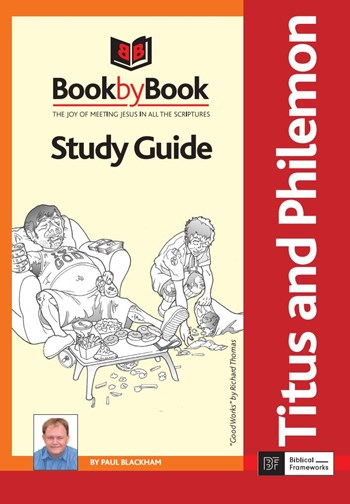
Titus and Philemon are world-changing books.
Paul commissioned Titus to appoint trustworthy church leaders over all the new churches on Crete. Yet, he reminded Titus that he would have to find leaders from people who were naturally lazy, deceitful, evil gluttons!
It is a fair description of humanity in general!
Yet, the Living God takes just such people and in the washing of rebirth by the Holy Spirit, He can produce fruitful servants who are eager to do good. Instead of calling for a slave revolt or merely campaigning for new laws, Paul’s letter to Philemon brought about the most radical anti-slavery revolution of all: within the church family there would be no slave or free.
These wonderful books show us how local churches are God’s agents for changing history.
The book of James challenges us with the most basic and essential realities of life, driving us to face up to the truth about following Jesus the Messiah. James gives us the truth without ornament. He cuts through the kinds of excuses and delusions we cloud ourselves with. It often seems that people speak of “faith” as if it were a matter of vague and dreamy ideas. People sometimes imagine that a mere intellectual assent to propositions within the Creed was the same as genuine faith in Jesus. Others think that ‘believing in Jesus’ is just about eternal fire insurance rather than actually following the LORD Jesus day-by-day. As we study James we will find all such empty notions of ‘faith’ destroyed.
Unlike many New Testament letters, we know very little about the background of this letter. It isn’t addressed to a particular church in a city like Paul’s letters to the Galatians, Romans, Corinthians etc. We don’t know the date of the letter because there are no historical references.
It is not absolutely certain which James actually wrote this letter, because he says so little about himself. He begins by describing himself as “a servant of God and the Lord Jesus Christ”, without giving us any specific job description for himself.
However, the James that we meet in the book of Acts and in the letters of Paul seems to fit the bill exactly. We see him in the book of Acts wrestling with the influx of Gentiles into the people of Israel. In the words of Romans 11, the wild branches were being grafted onto the olive tree of Israel. For more than 1500 years Gentiles had to become Jews in order to join Israel… but now, with the fulfillment of the Law in Jesus’ death, the Gentiles could remain as Gentiles and be welcomed into Israel.
Some have said that James was opposed to this, even if only temporarily, shown by the fact that Peter compromised on the gospel when men were sent from James [Galatians 2:11-14]. This might be so, but in Acts 15:13-21 we see James leading the council of Jerusalem in acknowledging the Old Testament teaching about the time when Gentiles would be part of Israel. In Acts 21:17-26 we see James dealing with the anti-Paul feeling among some of the Jewish believers who had not yet understood the Scriptures as he had done. In Galatians 2:9 Paul recalls how James welcomed the Gentile mission work.
In Acts 12:17; 15:13 and 21:18 we see James’ leading role in the Jerusalem church. James had enjoyed a personal appearance from Jesus after His resurrection [1 Corinthians 15:7]. Most fascinating of all we see in Galatians 1:19 that Paul refers to James as the brother of the Lord. Furthermore, Jude 1 tells us that Jude was the brother of James, indicating that Jude was also a brother of Jesus. We see this explicitly confirmed in Matthew 13:55. If James and Jude had grown up in the same household as Jesus and enjoyed His company and Bible study for so many years, we would expect them to be leaders in that early expansion of Israel. What an amazing childhood they must have enjoyed together!
Theodoretus in the 4th century AD quotes from a first century Christian concerning James. There is no guarantee that all of these comments are true of James, but they provide a fascinating [if unusual] portrait of the great man.
Hegesippus who lived near the apostolic age, in the fifth book of his Commentaries, writing of James. says
"After the apostles, James the brother of the Lord surnamed the Just was made head of the Church at Jerusalem... This one was holy from his mother's womb. He drank neither wine nor strong drink, ate no flesh, never shaved or anointed himself with ointment or bathed. He alone held the privilege of entering the Holy of Holies, since indeed he did not use woolen vestments but linen and went alone into the temple and prayed in behalf of the people, insomuch that his knees were reputed to have acquired the hardness of camels' knees."
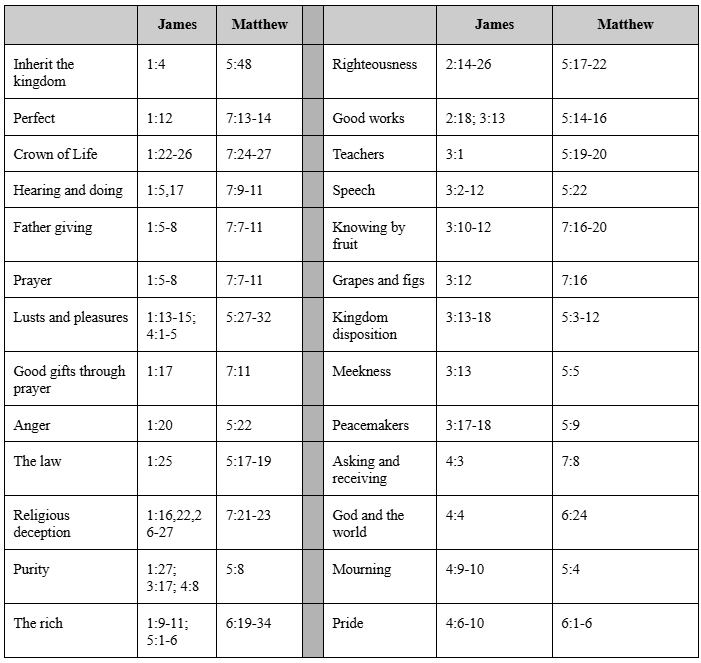
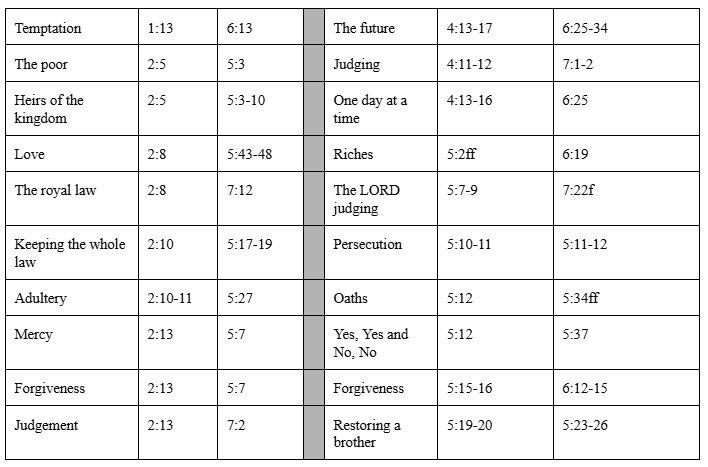
Sometimes people have wondered just how ‘Christian’ the book of James is because Jesus is only mentioned explicitly in 1:1 and 2:1. However, as we understand the book in a more thorough way we see that Jesus is present at every point. He is the source of all that James teaches. The connection between the teaching of James and the teaching of Jesus is so strong that the letter only makes sense when we have the teaching of Jesus alongside the text of James’ letter.
“In the epistle of James the Holy Spirit has given the church a commentary on Jesus’ Sermon on the Mount and Sermon on the Plain, a commentary that is rich in applications for daily life.”
George Stulac, James, [IVP, Leicester, 1993], note on page 34
J. A. Robertson: the words of Jesus “drop out freely and spontaneously, as from a mind that had so absorbed them that they had become part and parcel of its very self.”
R. R. Williams: “much of James reads like the gospel of Jesus rather than the gospel about Jesus.”
For this reason we have chosen to set the relevant teaching of Jesus at the beginning of each section of teaching so that we can see for ourselves how Jesus’ brother was so saturated with His teaching. The website thechristian.org contains a list showing the close parallels between the book of James and Jesus’ sermon on the mount.
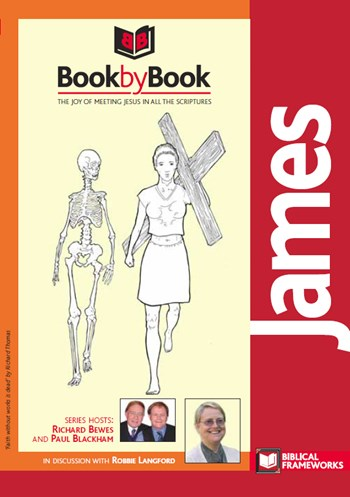
Even after we have begun to follow Jesus we still try to challenge Him or desert Him when we are faced with trials, sacrifice and suffering, as Peter had done.
This glorious letter of Peter takes us right down into the heart of these challenges. Peter learned a new wisdom, the profound, hidden wisdom of the LORD Jesus.
The Way of the Cross is the way of true life, eternal life, resurrection life.
The sufferings and death of Jesus blazed a path through the seemingly barren way of suffering into His glorious resurrection life and a renewed future universe.

The book of Revelation has fascinated the world down the ages.
The very name of the book suggests that it can tell us the deepest secrets of the universe and history - and indeed it can! This wonderful book takes us to the very heart of all history, the heart of the universe itself where we find the LORD Jesus Christ sharing the throne with His Father, surrounded by the Holy Spirit.
At the centre of reality, behind all the apparent confusion and chaos of this passing age, the Living God rules through Jesus, the Lamb and Lion of God. Jesus and His Bride, the Church, are seated in heaven far above all the powers of this age, as we wait for that day of judgment and new creation.